Volition - Alien Flesh Planet - (modular) assets, materials & foliage
For 6 months I have been working with a team on a game, called: Volition. With the art department we spent our time designing and visualising an alien planet. The planet is a living organism, consisting of meat, veins, skin, a breathing system and a blood circulation. We spent a month on researching how this living planet was 'born', how it eats, reproduces and reacts to outsiders. In order to make the planet feel completely otherworldly, we came up with the idea to make a vertical world. The living planet consists of huge pilars of flesh and skin, reaching so high and deep the player can never see the end or beginning. We deliberately made the environment to be disorienting.
I have had the pleasure of working full time on the 3D fleshy alien environment. I have enjoyed working on the project and have taken on many interesting challenges. The design of the enormous pillars turned out to be the major challenge: they had to be modular customizable but also organic and random.
Here follows the rest of the team. The Art team: Anna Petit (Concept art and Lead), Beau Saglia (VFX art), Jeroen Blok (Animations), Douwe Heijmerink (3D Environment Hard Surface), Denzil Ellis (Prop art). The Design team: Yael van Rossum, Leon van Oldenborgh, Thijs Roem. The Programming team: Tim Peeters and Dennis Borst. The Audio Team: Tim Verberne, Nino Saglia and Merijn Viergever.
Cinematics made in Unreal

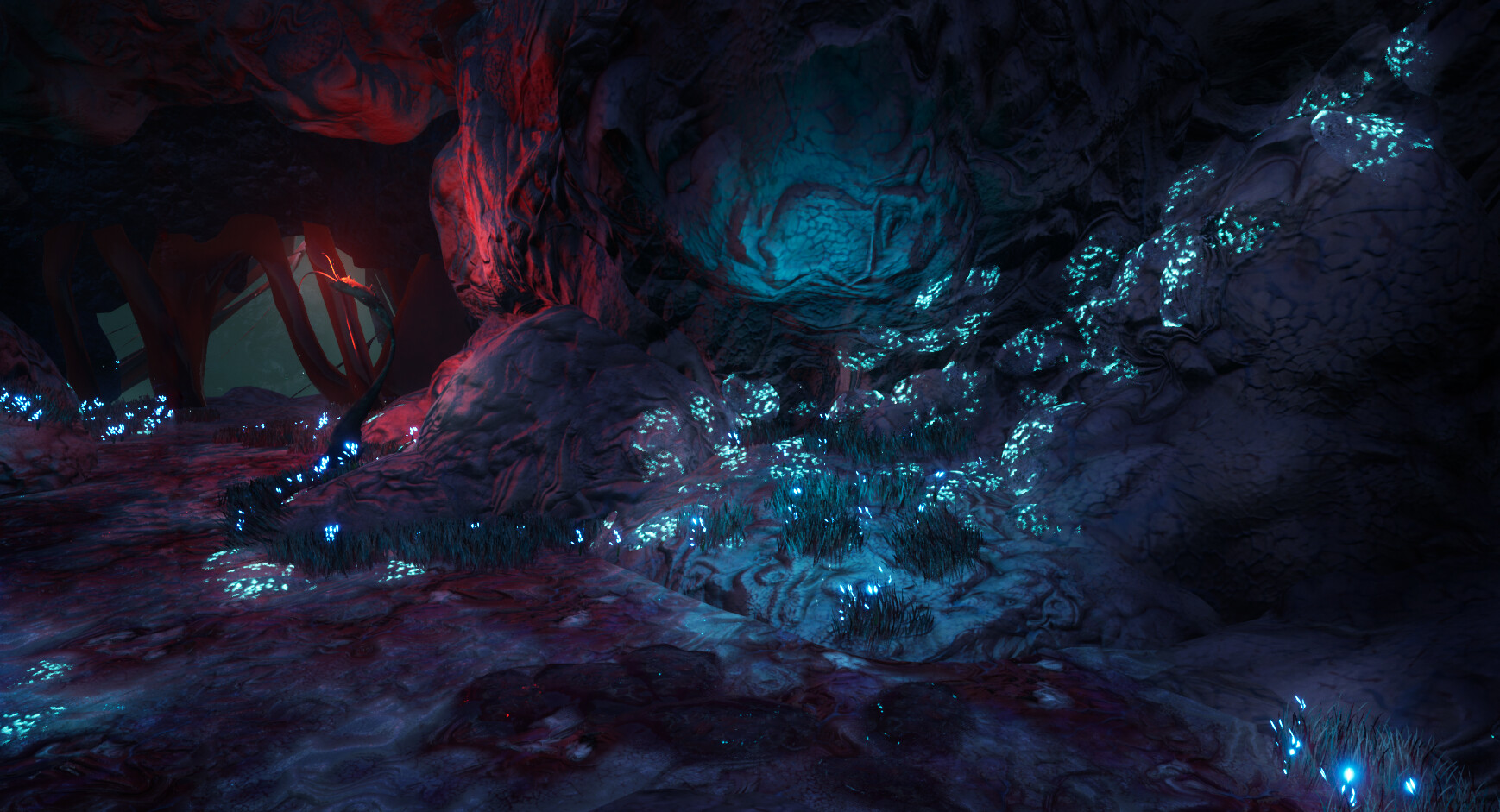
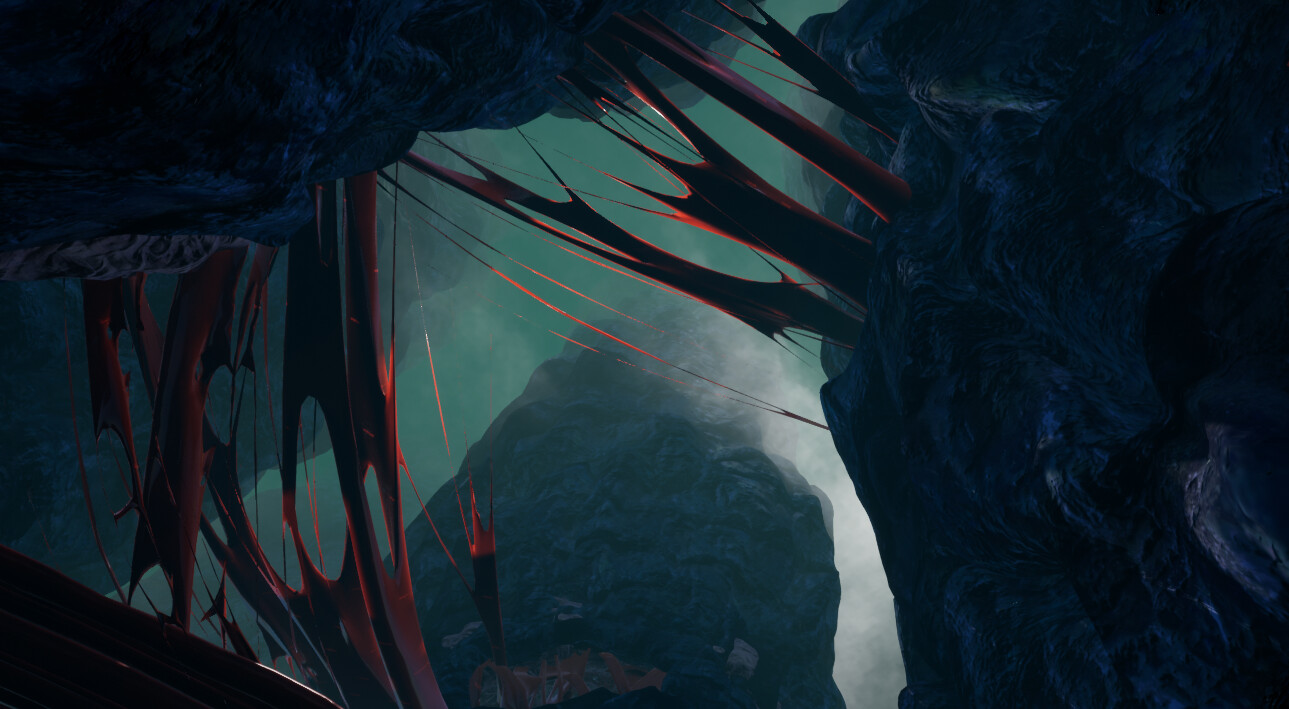
Tendrils are made by VFX artist Beau Saglia


Vocal chord door asset showcase

Vocal chord door asset breakdown

The living planet consists of vertical flesh pillars, which are connected via vein bridges. The veins reach out towards holes inside the pillars. The player can use the veins to reach different pillars and enter them via the holes.

In order to have lots of variations for the pillar, the playable area has 260 separate meshes in the mid section, so they can be individually replaced by the holes, to create new areas for level design.

Base of the flesh materials. It contains skin, torn meat, red thin meat, wrinkels, blood and veins. You can look at my Flesh Material post for the breakdown

Foliage breakdown

Flesh eating plant showcase
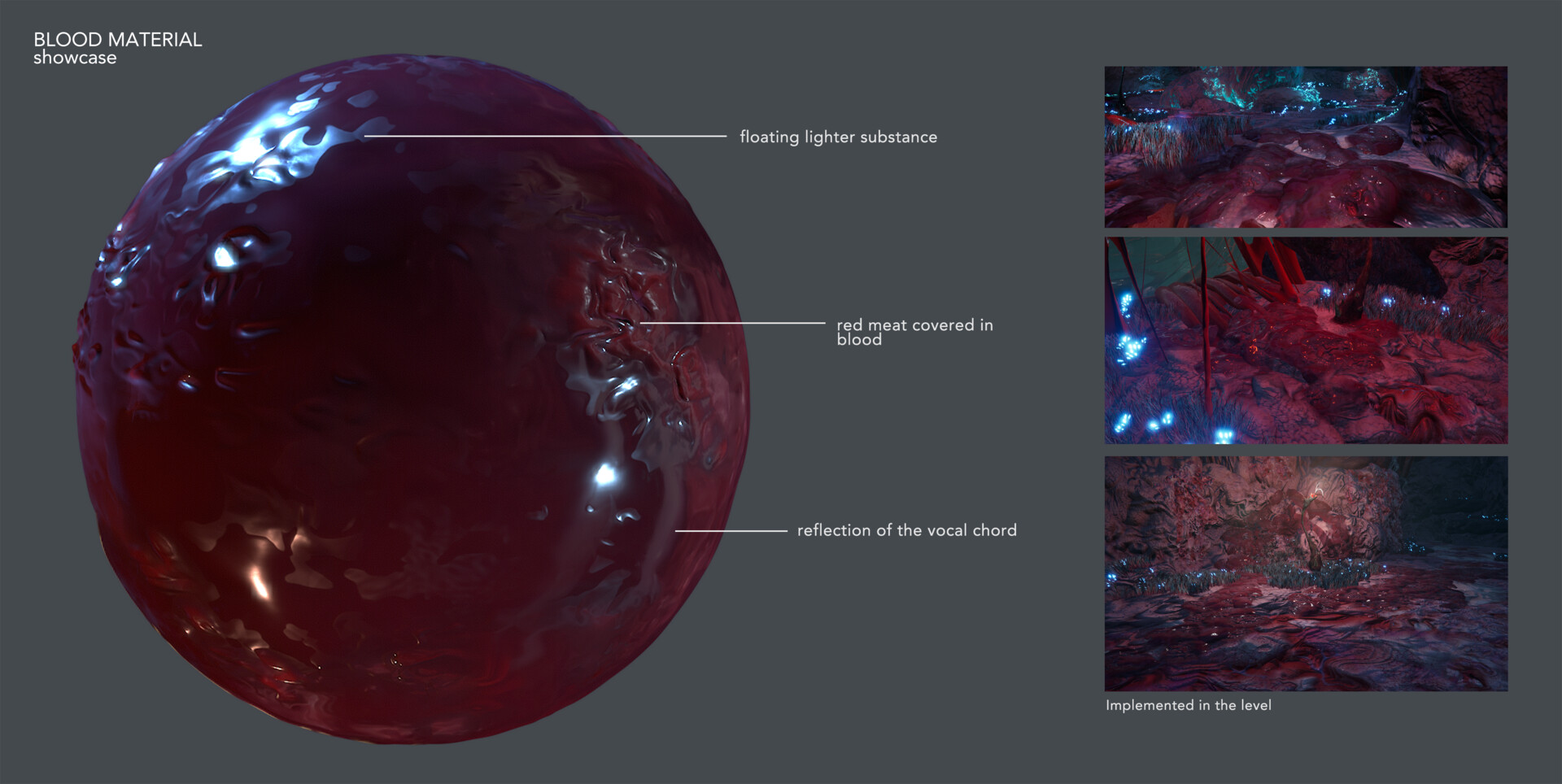
Blood material, made from the Base Flesh material. To add more variation and make the tendrils blend in with the floor.

Red meat material. Thinner parts of the meat, for areas around lots of blood.

Flesh wrinkle material. For larger stretches of more even terrain.

Testing the flesh wrinkle material on multiple organic meshes in one composition.
Painting the flesh materials, in Unreal, as planes with the foliage tool, to add more depth

Moss material made in Zbrush and Designer
Moss material painting with the foliage tool. Dither added by the VFX artist.

Additional references I used for inspiration
Teaser trailer of the game we made. Trailer edited by programmer Tim Peeters.